
How to Dry Brush Your Skin
Summary: Dry brushing means sweeping a natural-bristle brush over dry skin before you shower. It gently exfoliates away dead skin cells and dull, flaky skin, leaves you feeling invigorated, awake, with soft and smooth skin. Two or three minutes, a few times a week, is all it takes. It feels wonderful and your skin feels better afterwards.
Introduction: Dry brushing is one of those small self-care steps that sounds more difficult than it is. The truth is, it takes a couple of minutes with one tool, and leaves your skin feeling so soft, smooth, invigorated, healthy, and glowing that most people who try it keep going. I've been dry brushing for years, and it's genuinely one of my favorite ways to start the day.
So let's walk through it together ~ what dry brushing actually does (and what it doesn't because there's a lot of misinformation out there), how to do it properly, and how to choose a brush you'll love reaching for.
What is dry brushing?
Dry brushing is exactly what it sounds like: brushing your bare, dry skin with a firm natural-bristle brush, usually right before you step into the shower. It's a time-honored practice found in wellness traditions all over the world, and it has stayed popular for one simple reason ~ it feels good, and it leaves skin noticeably smoother and softer.
The whole idea is gentle mechanical exfoliation. As the bristles sweep across your skin, they lift away the dry, dull, dead, flaky cells sitting on the surface, the same ones that make skin look ashy, dry, or feel rough. What's left behind is softer, fresher skin.
What does dry brushing actually do for your skin?
Here's where I want to be honest with you, because there's a lot of misinformation online. You'll see dry brushing described as everything from a detox treatment to a cellulite cure to a way to "drain your lymph." Those bigger claims aren't well supported, and don't have scientific evidence to back them up. I'd rather tell you what dry brushing reliably and honestly does, and why cultures around the world have been dry-brushing for centuries, so you know what to expect:
It exfoliates. This is the real, dependable benefit. Sweeping away dead surface cells leaves skin smoother and softer to the touch, and helps it look brighter and less dull. If you struggle with rough patches on elbows, knees, or the backs of your arms, this is where you'll notice the difference most.
It feels genuinely invigorating. There's a reason people do this in the morning. The brushing brings a warm, awake flush to the surface of the skin and leaves you feeling refreshed and tingly in the best way. It's a lovely, grounding couple of minutes before the day gets going.
It preps your skin for what comes next. Once you've swept away that dry surface layer, whatever you apply afterward ~ a nourishing body oil or moisturizer ~ goes onto smooth, receptive skin and absorbs more evenly and deeply. Dry and dead skin cells simply don't absorb oils and moisturizer as well as fresh, new skin cells. Exfoliate, then nourish. The two steps together do far more than either alone.
So, no promises about toxins or cellulite, but you will have softer, smoother, healthier, glowing, brighter-looking skin and a routine that feels wonderful.
What about lymphatic drainage, detox, and cellulite?
If you've read about dry brushing anywhere, you've almost certainly met the big promises ~ that it drains your lymphatic system, detoxes your body, boosts immunity, and smooths away cellulite. Those claims are everywhere, so let's walk through them honestly.
Lymphatic drainage. This is the big one. Manual lymphatic drainage is a genuine clinical technique, but it's performed by trained therapists, and there aren't controlled studies showing that using a dry brush move lymph the same way. Your lymphatic system is kept flowing mostly by muscle movement and exercise, not by brushing the skin. Some dermatologists feel brushing may give a mild, massage-like nudge to surface circulation, and it truly does feel that way, but "activates lymphatic drainage" is a stronger promise than the evidence supports.
Detox. Your skin is a protective barrier, not a detox organ. The real work of clearing waste is done by your liver, kidneys, and lymphatic system, supported best by water, movement, and rest. Brushing your skin doesn't "release toxins." What it does do is sweep away dead surface cells, which is genuinely lovely, just not detoxification.
Cellulite. Dry brushing can temporarily plump and flush the skin, which might make dimpling look a touch less noticeable for a bit, but there's no solid evidence it reduces cellulite in a lasting way.
So why do I love it, and why might you? Because the honest benefits are worth it all on their own: real exfoliation for softer, smoother, brighter-looking skin, the removal of dead and dull skin cells, a wonderfully invigorating few minutes, and beautifully prepped skin for oils and moisturizers which leaves skin glowing.
Where does dry brushing come from?
Dry brushing is not a new trend. It has been practiced in wellness traditions all around the world for centuries, and is most deeply rooted in Ayurveda, India's ancient system of holistic wellness, where the practice is known as garshana. Traditionally, it was an energizing, awakening part of a daily self-care routine. That long history is part of why it endures ~ people have found it grounding and invigorating for a very long time.
How do you dry brush, step by step?
It's very simple once you've done it once. Here's how:
1. Start dry, before your shower
Your skin and your brush should both be completely dry. Standing in the shower (before you turn the water on) is the best spot, since a little dry skin will flake off as you go.
2. Begin at your feet and work upward
Start at your ankles and feet, and move up your legs using long, smooth strokes. The traditional technique is to always brush upward, toward your heart, in sweeping motions along the arms and legs, with gentle circular motions over knees, elbows, and other joints.
3. Keep your pressure light
This is the part people get wrong. Dry brushing should feel invigorating, never painful. Your skin may turn lightly pink, which is normal, but you should never scratch, drag, or press so hard it hurts. Let the bristles do the work. A lighter touch on your stomach, chest, and any delicate areas.
4. Skip anywhere that's not happy
Brush around, not over, any broken, irritated, sunburned, or freshly shaved skin. If a spot is sore or sensitive, leave it be.
5. Shower, then nourish
This middle step matters, so don't skip it. Rinse away all that loosened, dead, and flaky skin ~ a gentle botanical body wash and a soft sea sponge are lovely here. Then pat your skin most of the way dry, and while it's still slightly damp, smooth on your body oil/moisturizer. That last step, on freshly brushed and cleansed skin, is the one that turns dry brushing from "nice" into "why did I not do this sooner." So the full order is simple: brush, shower, oil.
Tip: Two or three minutes is plenty. This isn't a workout, and more isn't better. A few unhurried minutes, two or three times a week to start, will show you everything dry brushing has to offer.
Which dry brush should you choose?
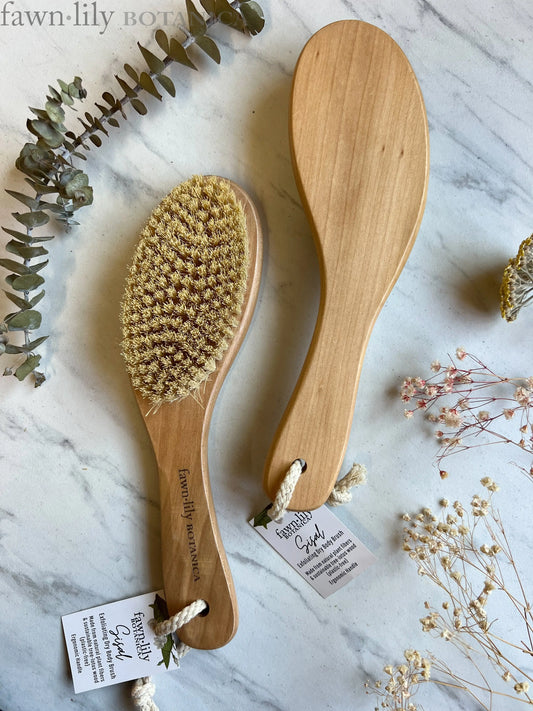
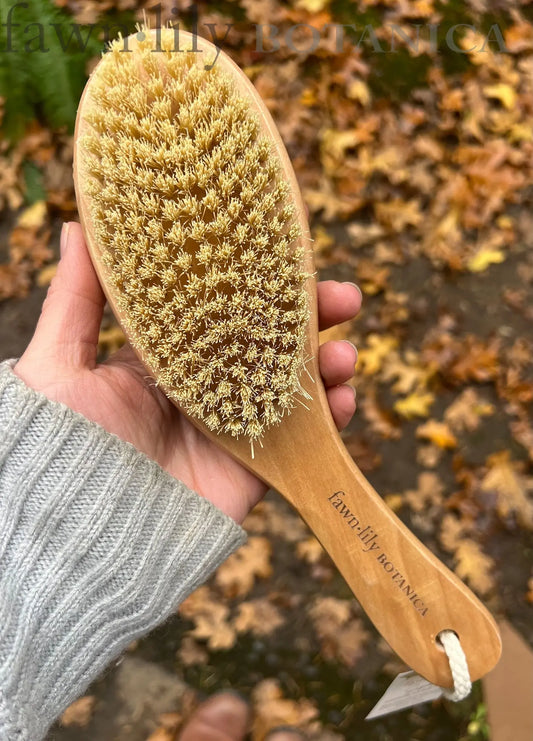
A good brush makes all the difference, and honestly, this is the part I care about most, because I put a lot of thought into the ones we make. Our body brushes are all plastic-free, made with natural sisal (a plant fiber from the agave family) on beautiful lotus tree wood or sustainable bamboo. Here's how to pick:
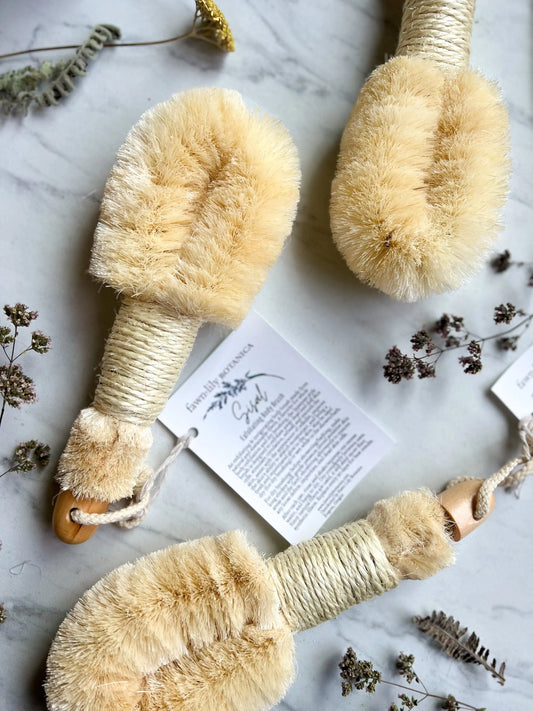
New to dry brushing? The Sisal Botanical Body Brush is a lovely, uncomplicated place to begin ~ natural sisal, a comfortable shape, and a gentle-but-effective feel.
Want something beautiful you'll enjoy holding? The Lotus Wood + Sisal Dry Brush pairs sisal with a warm lotus-wood handle, and the Round Bamboo + Sisal Dry Brush has a rounded palm shape that fits the hand and looks lovely sitting out on a shelf.
Prefer a longer reach? A handled brush, like our Lotus Wood + Sisal Dry Brush, helps you get to your back and the backs of your legs without contorting.
Whichever you choose, sisal is a wonderful bristle for dry brushing: firm enough to exfoliate well, gentle enough that most skin gets along with it beautifully. (And because a good brush lasts many months rather than the few weeks a plastic pouf gives you, it's one of the kinder, lower-waste swaps you can make.)
Can you dry brush your face?
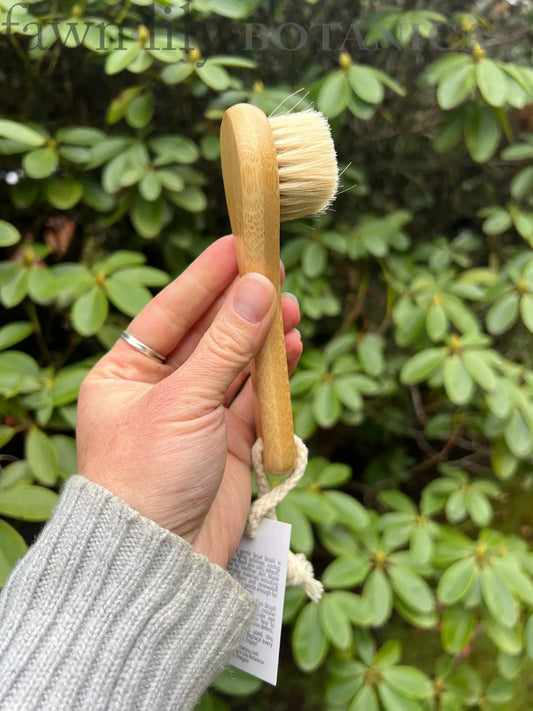
You can, but not with your body brush ~ facial skin is far more delicate and needs a much softer, smaller tool made for the job. Our Wool + Bamboo Facial Dry Brush uses fine, soft bristles to gently lift away dry, dull surface skin on the face, leaving it feeling smooth and looking refreshed before you cleanse or apply your serum.
Go even lighter here than you would on your body, use it only a couple of times a week to start, and always brush gently. If you have reactive or breakout-prone skin, introduce it slowly and see how your skin feels.
The best pairing: dry brush, then body oil
Dry brushing and body oil are a perfect pairing. Brushing clears away the dry surface layer that usually keeps oil sitting on top, so when you smooth on an oil afterward, it absorbs better, melting into soft, receptive skin instead.
Our Alpine Meadow Body Oil is a beautiful partner for this ~ a lightweight blend of botanical oils that soaks in quickly and leaves skin silky rather than greasy, with a soft floral-and-woodsy scent. Brush first, then shower (a botanical body wash is lovely here), then while your skin is still a little damp, massage the oil in. That brush, shower, nourish routine is the whole secret to soft, glowing skin, and it feels like a small spa moment at home.
Psst ~ this pairing is also lovely for supporting your skin barrier through dry or cold months. If that's on your mind, our guide on how to repair your skin barrier naturally is a nice companion read, written for facial care.
How do you care for a dry brush?
A little care keeps your brush working well for as long as possible. Keep it dry, since it lives its whole life on dry skin ~ store it somewhere with good airflow, not sealed in a steamy shower. Every week or two, remove built-up dead skin by tapping it out and combing through the bristles with your fingers or a clean comb. If it needs a deeper clean, swish the bristles (bristles only, not the wood) in water with a little gentle soap, shake it out well, and let it air dry bristle-side down so the wood doesn't sit in water.
And here's something to remember - a dry brush isn't forever. Even with good care, dead skin gradually works into the bristles and they soften over time. For best results, plan to replace your brush around every 90 days; with good care it may last up to 9 months, so replace it sooner if the bristles thin out or lose their firmness. The wooden handle will happily outlive that, but the bristles are the part that does the work, and fresh ones simply feel and perform better.
Who should be cautious?
Dry brushing suits most people, but a gentle heads-up: if you have a skin condition like eczema or psoriasis, very sensitive or easily irritated skin, or any broken or inflamed areas, go slowly and keep your touch light, or check with your dermatologist first. Always brush around cuts, sunburn, rashes, and freshly shaved skin, never over them. When in doubt, less pressure and less often is the kinder choice.
Frequently asked questions
How often should I dry brush?
Two or three times a week is a lovely place to start, and plenty to see softer, smoother skin. Once you know how your skin responds, you can work up to daily if you'd like, as long as you're keeping your pressure light and your skin stays comfortable. There's no prize for overdoing it ~ gentle and consistent beats hard and frequent every time. If your skin ever feels tender, irritated, or looks more than lightly pink, that's your sign to ease off, both in pressure and in how often you brush.
Should I dry brush before or after showering, and on wet or dry skin?
Dry skin, before your shower. That's where the name comes from. Both your skin and the brush should be completely dry, which is what lets the bristles gently lift away dry surface skin. Doing it right before you shower is ideal, because you can rinse off the loosened skin, then follow with a body oil or moisturizer while your skin is still slightly damp. Brushing on wet skin doesn't exfoliate the same way and can tug uncomfortably, so save the water for afterwards.
Does dry brushing hurt? Can sensitive skin handle it?
It shouldn't hurt at all. Dry brushing should feel invigorating and pleasant, a little like a firm, bristly massage. A light pink flush afterward is normal, but scratching, stinging, or soreness means you're pressing too hard or moving too fast. If you have sensitive skin, choose a softer touch, start with just once or twice a week, and pay attention to how your skin feels the next day. Many people with sensitive skin dry brush happily ~ the key is a gentle hand and easing into it rather than diving in daily.
What does dry brushing actually do?
Reliably, it exfoliates: it sweeps away dull, dry, dead surface skin, leaving your skin smoother, softer, and brighter-looking. It also feels wonderfully invigorating, and it preps your skin so that whatever you apply afterward absorbs more evenly. You'll see grander claims online about detoxing or reducing cellulite, but those aren't well supported, so we don't make them. We think the honest benefits ~ softer, smoother skin and a routine that feels genuinely good ~ are more than reason enough.
Can I use my body brush on my face?
Please don't ~ a body brush is far too firm for the delicate skin on your face. If you'd like to dry brush your face, use a brush made specifically for it, like our Wool + Bamboo Facial Dry Brush, which has much finer, softer bristles. Brush very gently, only a couple of times a week to begin, and introduce it slowly if your skin is reactive or breakout-prone. Facial skin rewards a light, patient touch, so treat it more delicately than you would your arms and legs.
How do I clean and care for my dry brush?
Keep it dry and store it somewhere with good airflow rather than a steamy shower. Every week or two, tap it out and comb through the bristles to remove built-up dead skin. For a deeper clean, swish just the bristles in water with a little gentle soap, shake it out, and let it air dry bristle-side down so the wooden handle isn't sitting in water. Avoid soaking the wood. Good habits like these keep your brush fresh for as long as possible.
How often should I replace my dry brush?
Even a well-made brush wears out, because dead skin gradually works into the bristles and they soften with use. For best results, plan to replace your brush around every 90 days; with good care it may last up to 9 months, so replace it sooner if the bristles start to thin, splay, or lose their firmness. Keeping it dry and cleaning it regularly helps it last. The wooden handle lasts far longer, but the bristles are what do the work, so fresh ones are worth it. It's still a much lower-waste choice than a plastic pouf, which needs tossing every few weeks.
Which dry brush is best for a beginner?
Our Sisal Botanical Body Brush is a wonderful starting point ~ natural sisal bristles that exfoliate effectively without being harsh, on a simple, comfortable shape. If you'd like something with a handle for reaching your back, or a beautiful wooden piece you'll enjoy keeping out, the Lotus Wood + Sisal and Round Bamboo + Sisal brushes are both lovely next steps. They're all plastic-free and, replaced just once or twice a year, a far kinder, lower-waste choice than a synthetic brush or pouf.
Does dry brushing help with lymphatic drainage?
Not in the way it's often claimed. Manual lymphatic drainage is a real clinical technique performed by trained therapists, but there's no controlled research showing that dry brushing moves lymph the same way, and your lymphatic system is kept flowing mainly by muscle movement and exercise. Some dermatologists feel brushing may give a mild, massage-like lift to surface circulation, and it certainly feels invigorating, but "activates lymphatic drainage" overstates the evidence. We love dry brushing for what it reliably does: exfoliating, smoothing, and leaving you feeling refreshed. If you have swelling or a lymphatic condition, please speak with a healthcare professional.
Does dry brushing get rid of cellulite or detox your body?
Honestly, no. There's no solid evidence that dry brushing reduces cellulite in any lasting way, though the temporary flush it creates can make skin look momentarily smoother. And your skin is a protective barrier, not a detox organ ~ clearing waste is the job of your liver, kidneys, and lymphatic system, best supported by water, movement, and rest. What dry brushing genuinely gives you is exfoliation for softer, brighter-looking skin and a lovely, invigorating few minutes.
Can dry brushing help with keratosis pilaris or rough, bumpy skin?
Gentle dry brushing can help smooth the look and feel of rough, bumpy skin, like the little bumps many of us get on the backs of our arms, because it exfoliates away the dead surface cells that add to that texture. It won't cure keratosis pilaris, which is a very common and harmless skin trait, but regular gentle exfoliation often leaves that kind of skin feeling smoother. Keep your pressure light, brush around any irritated or broken skin, and if you have a skin condition, check with your dermatologist first.
A soft place to start
Dry brushing is about as simple as self-care gets: one good brush, a couple of minutes, and skin that feels softer for it. Add a nourishing oil afterward and you've got a little at-home routine that costs almost nothing to keep up and feels like a genuine treat. If you're ready to try it, our plastic-free bath and body tools are all right here, hand-picked and made with care.
With gratitude,
Irene ~ Owner, Formulator + Chief Maker, Fawn Lily Botanica