
Why Natural Sea Sponges Are Better Than Plastic Poufs {+ How to Choose, Use & Care for Yours}
"FawnLilyBotanica's natural sponges are the real deal, and arrived more quickly than expected. Upon arrival, the sponge literally smelled like the ocean ~ a must that they are sustainably harvested. Once you make a natural sponge part of your showering routine, it's impossible to go back to the alternatives."
~ Adrianne, verified buyer
Published September 2023 ~ Updated June 2026
Summary: Natural sea sponges are sustainably harvested from the ocean, gently exfoliate skin, lather well with less product, and are completely plastic-free and biodegradable. They carry skin-beneficial minerals from the sea ~ calcium, magnesium, zinc, and more ~ and leave zero microplastic residue. Our sponges are sourced from around the world, and are available in multiple sizes and styles starting at $8.50. Read on for the full guide ~ including how to choose the right sponge, how to care for it, and what our customers say about making the switch.
------------------------------------------------
When it comes to bathing, the right tools can make all the difference. However, most of us don't give much thought to what we use to wash our bodies. We'll purchase a cheap plastic pouf, then replace it every few weeks without thinking too much about it.
But, once you start thinking about what a plastic pouf actually is ~ made from petroleum-based synthetic fibers, with microplastics shedding with every use ~ it's hard to go back to using them.
However, natural sea sponges are the perfect (and eco-friendly) tool! They're better for your skin and kinder to the planet.
Unlike synthetic sponges and plastic poufs, sea sponges are completely natural, sustainable, renewable, biodegradable, feel luxurious, and they contain minerals which are beneficial for the skin. They are perfect for lightly exfoliating skin, cleansing dirt, sweat, impurities, pollutants, and dead skin cells for fresh, glowing skin, yet they are gentle enough to be used in the bath or shower daily.
Thousands of our customers (and myself) have happily made the switch to natural sea sponges years ago, and never looked back.
What's Actually Wrong With Plastic Poufs?
Most people don't give their bath pouf a second thought. But plastic poufs are made from nylon or polyethylene ~ both petroleum-based plastics ~ and with every use, they shed tiny synthetic fibers that rinse down the drain, contaminating local waterways, rivers, and soil. Not only are they detrimental to our planet, but they can also damage your skin.
The research on this has been building steadily. A 2025 clinical review published in the Journal of the American Academy of Dermatology found that microplastics in personal care products are capable of penetrating the skin barrier and may contribute to oxidative stress, local inflammation, and accelerated skin aging. A separate 2025 review found that more than 16,000 chemicals are involved in plastic production, with 94% unregulated internationally. The European Union has moved to ban intentionally added microplastics in rinse-off personal care products by 2027 ~ a sign that regulators are paying close attention to what the science is showing.
Beyond what ends up on your skin, plastic poufs are energy-intensive to manufacture and end up in landfills at the end of their short lives ~ where they continue breaking down and leaching microplastics into soil and water supplies for decades. And because they trap dead skin cells deep in their dense, folded layers where they can't fully rinse clean, most hygiene experts recommend replacing them every 3~4 weeks. That's a dozen or more plastic poufs per household, per year.
Your $0.99 plastic bath pouf is cheap in the short run, but not the long run.
"I have been on a search for a more eco-friendly option to the plastic pouf. I have tried other items and they did not work for me and did not lather. I was hesitant about the sea sponges, but thought I would give them a try. I was so excited when they delivered on all of the things I was looking for ~ they lather really nicely, dry really well, and are easy to clean. I would recommend these and will continue to use them." ~ Nicole S., verified buyer
What Are the Benefits of Natural Sea Sponges?
Sea sponges have been used for bathing for hundreds of years, and there are good reasons why. Here's what makes them special:
They gently exfoliate without irritating skin. Sea sponges have a naturally porous texture that gently exfoliates, and is ideal for removing dead skin cells, sweat, impurities, and environmental pollutants, and promoting a fresh and healthy glow. Unlike synthetic sponges, which can sometimes be harsh on the skin, natural sponges are soft and flexible enough for daily use, even on sensitive skin. No harshness, no irritation, just skin that feels genuinely clean and refreshed.
"I absolutely love this sponge! I've been using it for about 2 months and I've noticed how smooth my skin is now. My legs finally look smoother and a uniform color." ~ Andrea H., verified buyer (wool sponge)
They're naturally mineral-rich. Sea sponges retain ocean minerals throughout their life ~ calcium, magnesium, zinc, potassium, iron, and sodium. Calcium supports healthy cell turnover and collagen production. Magnesium is known for its calming properties, which makes it particularly helpful for sensitive or reactive skin. Zinc supports skin regeneration and natural barrier function. These aren't added ingredients ~ they're simply what sea sponges are made of.
They lather well and use less soap than you'd expect. Sea sponges are highly absorbent and hold a large amount of water, which means a small amount of soap or body wash creates a rich, luxurious lather. Most people find they use less soap with a sponge, which is better for your skin (less stripping), and saves money since your bottle of body wash lasts longer.
They're sustainably harvested and truly renewable. Our sponges are hand-cut by divers in the Caribbean and Gulf of Mexico, leaving the base of each sponge intact so it can regrow. Studies on harvested sponge beds have found that properly managed harvesting actually increases sponge population density over time. And the divers we work with come from families who have been harvesting sponges for generations ~ people who care deeply about the ecosystems they work in and harvest with the next generation in mind.
They're 100% plastic-free. No synthetic fibers, no petroleum-based materials, nothing that sheds microplastics down your drain.
They're biodegradable and compostable. Sea sponges are biodegradable, and they can be easily composted once they've reached the end of their life-cycle (dermatologists recommend every 3~4 weeks). Nothing to landfill, no plastic fragments left behind. In contract, plastic poufs shed microplastics while being used which go down the drain contaminating local water sources, and they have to be thrown away at the end of their lifecycle. Once in a landfill, they continue to break down and contribute to micro-plastic contamination in our soil, water sources, and oceans.
How long does a natural sea sponge last?
With proper care ~ rinsing thoroughly after each use, allowing it to dry completely between uses, and doing a deep baking soda soak every couple of weeks ~ your sponge will stay fresh and effective. Dermatologists recommend replacing all bath sponges, natural and synthetic, every 3~4 weeks. The upside with a natural sea sponge: when it's time to replace it, it goes straight into your compost rather than a landfill. For the full care guide including signs it's time to replace your sponge, see our dedicated post: Natural Sponges: Cleaning, Care & When to Replace.
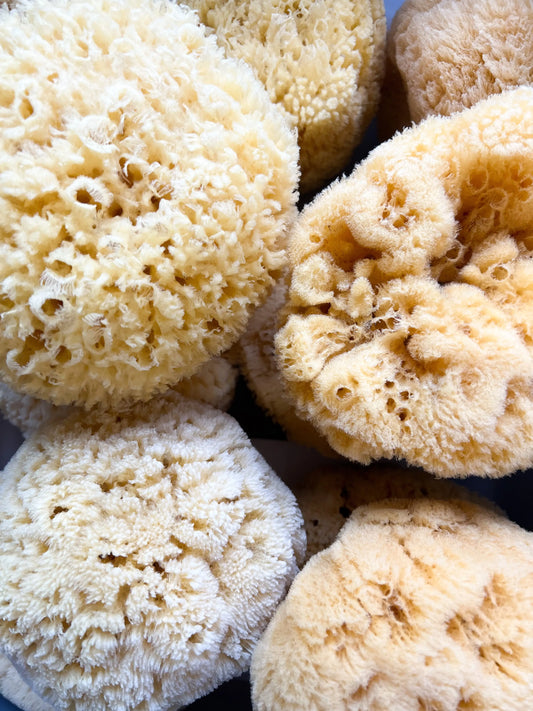
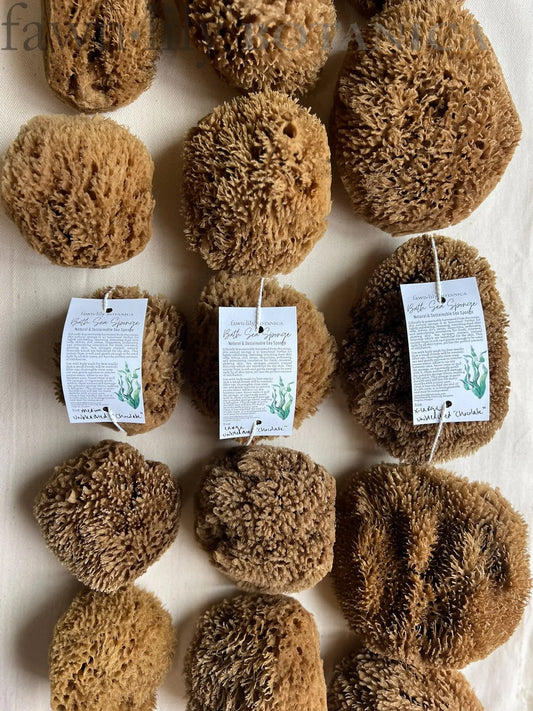
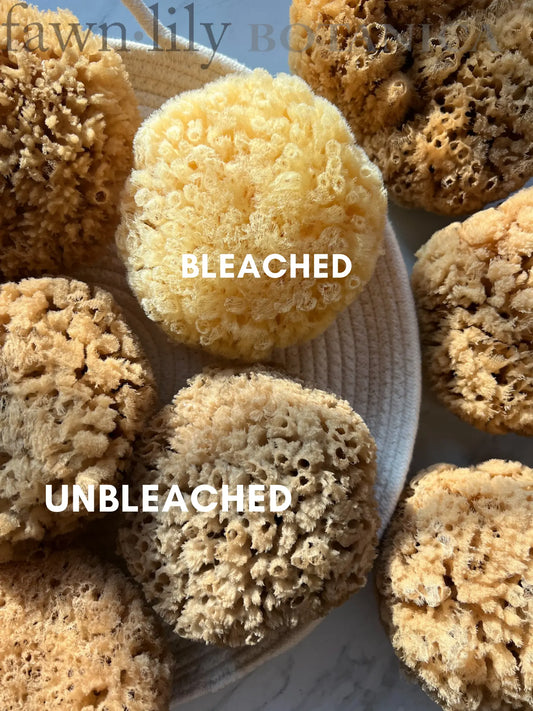
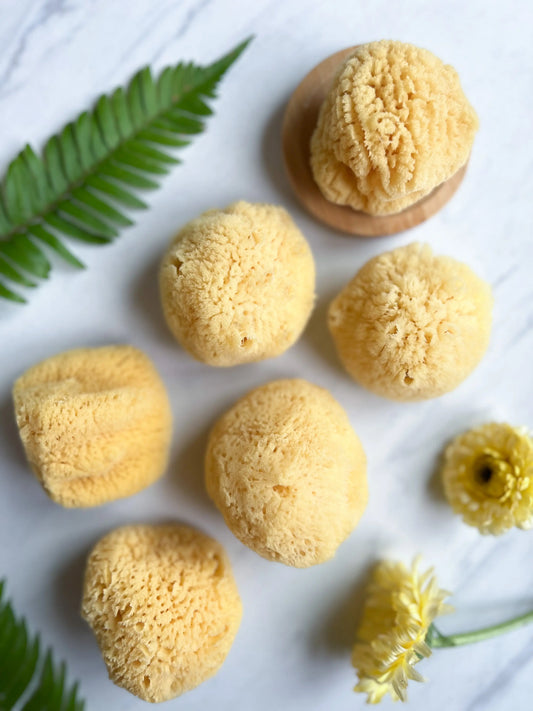
Each one is unique. Something that we really love about natural sea sponges is how unique and beautiful each one is. Because they grow naturally in the ocean, no two sponges are exactly alike in shape, size, or texture. Not manufactured to look identical ~ they're genuinely one of a kind.
"Really happy with this sea sponge! It feels soft yet exfoliating in a gentle way and creates a surprisingly nice lather with body wash. I also love that each sponge has its own natural shape and texture, which makes it feel special compared to synthetic bath sponges." ~ Kelly, verified buyer
Which Natural Sea Sponge Is Right for You?
We carry several types and sizes, sourced from two distinct origins. Here's a quick guide:
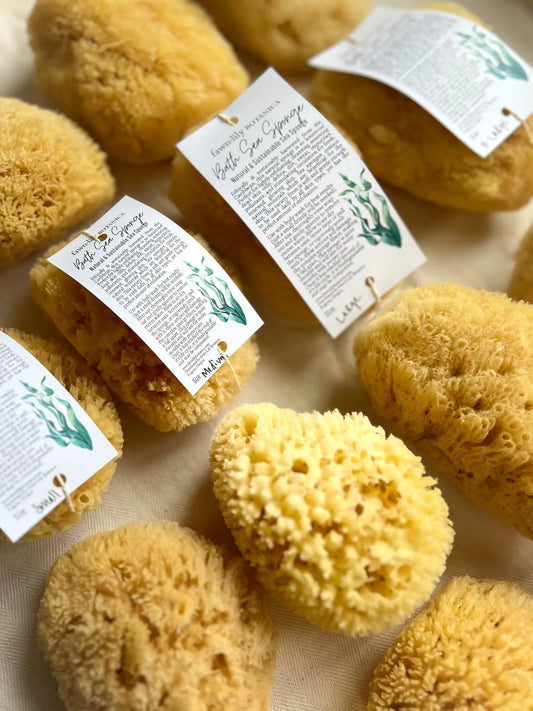
Natural + Sustainable Bath Sea Sponges {Caribbean} ~ From $8.50
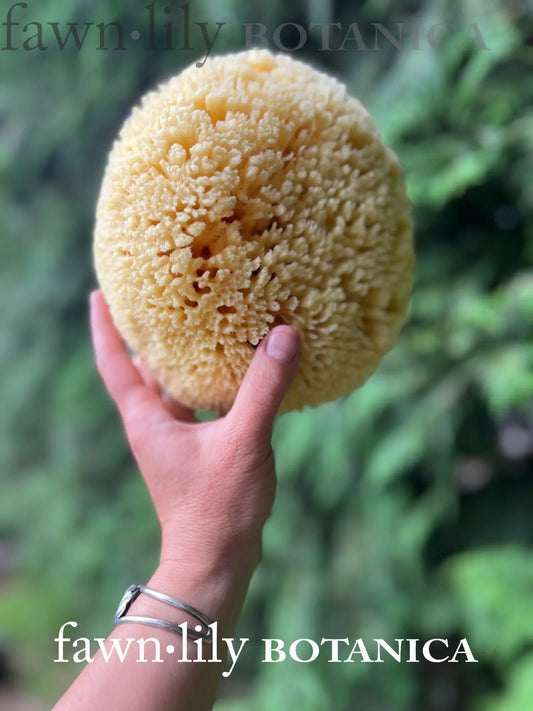
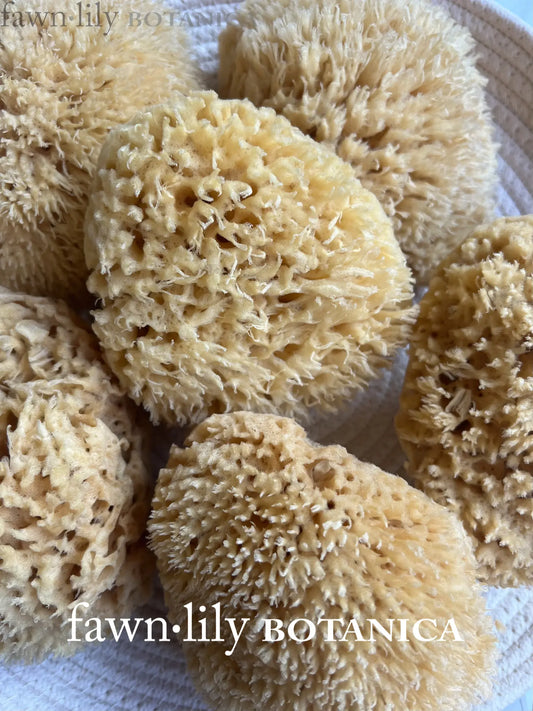
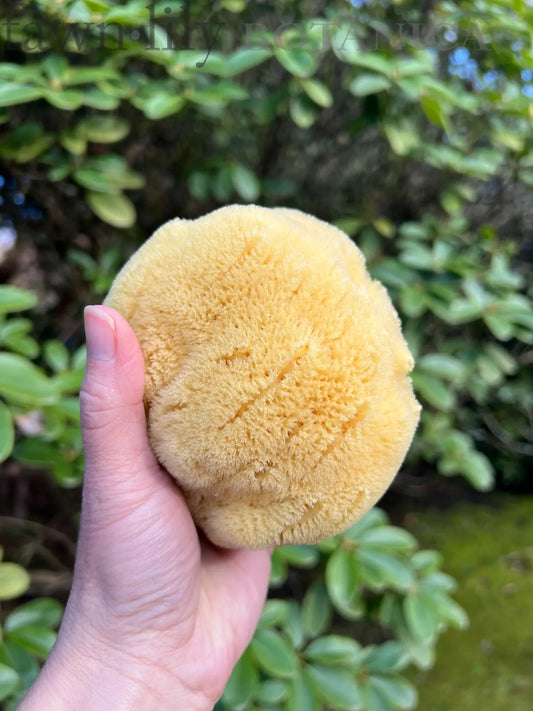
Our most popular bath sponge, with over 160 five-star reviews. These are grass sponges, sustainably harvested from the Caribbean. Wonderfully soft and gentle enough for daily use on all skin types, including sensitive skin. Available in Small/Medium, Large, X-Large, and XX-Large.
If you're new to natural sea sponges and not sure where to start, this is a good one to start with.
"These sea sponges are the real deal. They do exactly what they're supposed to, and honestly, they're a massive upgrade from those old loofahs. My skin feels so much smoother now. I'm genuinely impressed with how well they work. You won't regret switching to these!"
~ Jason B., verified buyer
Premium Whole Natural + Sustainable Bath Sea Sponges {Caribbean} ~ From $19.00
Whole-form sponges ~ not cut, so you get the full natural shape as it grew in the ocean. Generous in size (Large, X-Large, and XX-Large), with a beautiful sculptural quality if you like a sponge that looks as good as it works.
Premium Whole Bath Sea Sponges {Gulf of Mexico}
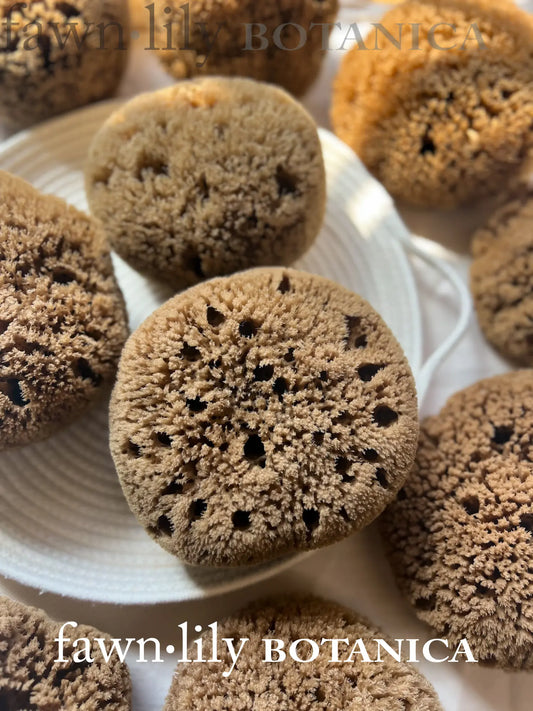
Sourced from the Gulf of Mexico, these are big and dense, very durable, and more exfoliating than our other sponges. A good choice if you want a sponge with real substance that holds up well over time.
"The sea sponges are big and dense. Also very gentle on my skin. I always buy my sponges from Fawn Lily. Very high quality."
~ Whitney I., verified buyer
Premium "Deep Sea" Wool Bath Sea Sponges
Harvested from deeper waters, our wool sponges have a softer, denser texture than grass sponges ~ almost silky against the skin. If you have very sensitive or delicate skin, or simply prefer the gentlest possible bathing experience, these are worth trying.
Not sure which to choose? Browse the full collection here ~ and feel free to reach out if you'd like a recommendation. I'm happy to help.
How Do You Use a Natural Sea Sponge?
Using a sea sponge is straightforward, and most people find it becomes a genuinely pleasant part of their routine.
Before your first use: Rinse under running water. You may notice small natural debris in the sponge ~ a bit of sand, small pebbles, or pieces of seaweed which you can gently remove. This is completely normal, and a nice reminder that these are real, ocean-grown organisms.
In the shower or bath: Wet the sponge thoroughly, then add a small drizzle of natural body wash directly onto the damp sponge. Only a small amount of soap will be needed - sea sponges naturally hold a lot of water which creates lots of lather from a small amount of soap. Squeeze gently to work up a lather. Using circular motions, massage your body gently. The natural texture will exfoliate and cleanse without the need for hard scrubbing.
Be careful not to scrub too hard as this can tear and damage the delicate sponge fibers.
Always squeeze rather than twist or wring ~ wringing can tear and break the natural fibers and shorten the sponge's life considerably.
Only use natural soaps. Soaps with synthethic ingredients, including fragrances, colors, sudsing agents, etc., can damage the sponge's natural fibers and cause it to break apart.
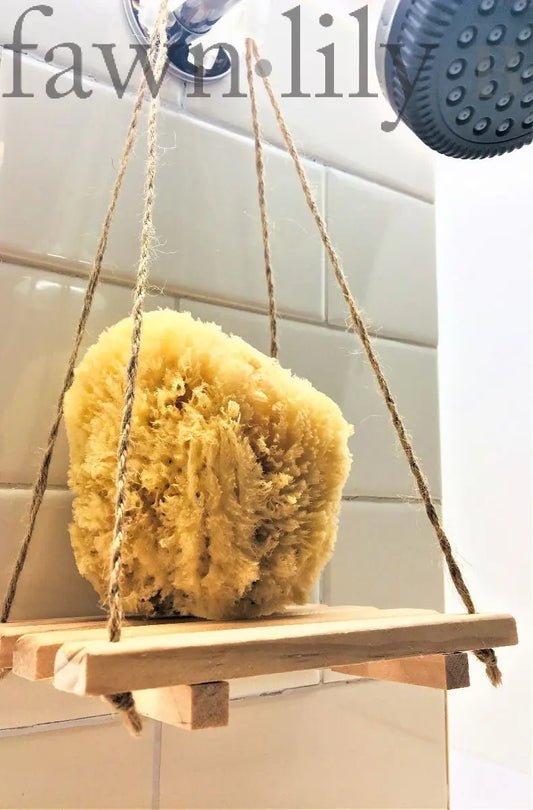
After each use: Rinse soap out thoroughly until the water runs clear, squeeze out excess water gently, then set or hang your sponge somewhere with good airflow to dry completely between uses. Full drying between uses is necessary to extend your sponge's life, and prevent the growth of bacteria or mold. Once again, don't ever twist or pull the sponge, as this will damage and tear the fibers, causing your sponge to fall apart.
Monthly deep cleanse: Once a month, soak your sponge in a solution of 1 tablespoon of baking soda per cup of water for about 15 minutes. Rinse well and allow to dry completely before your next use.
At the end of its life: These sponges are durable and will last for several weeks-months with proper care. Once they have reached the end of their life cycle, they are biodegradable and can be easily composted. Dermatologists recommend replacing all bath sponges, natural and synthetic, every 3~4 weeks. For the full care and replacement guide, see our dedicated article on how to clean and care for your natural sea sponge.
Beyond Sponges: Building a Plastic-Free Bath Routine
If you're ready to take the swap further, we carry a full range of natural, plastic-free bathing tools that pair beautifully with our sponges:
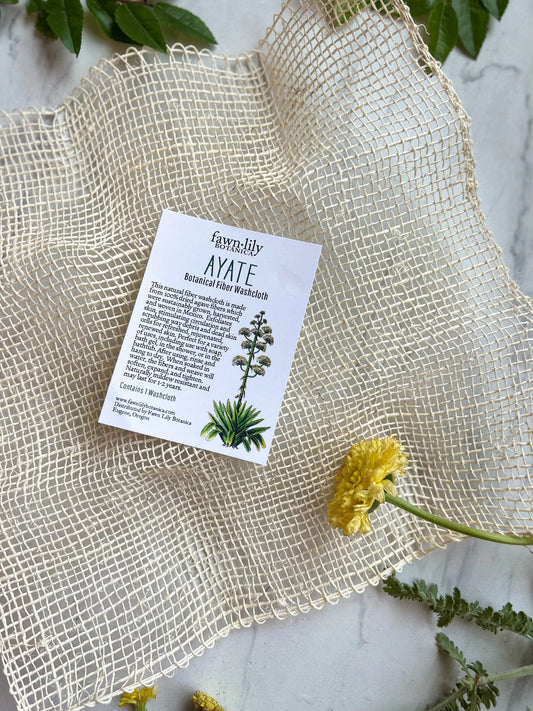
Ayate Agave Fiber Washcloths ~ woven from natural agave plant fibers, these are exfoliating, completely plant-based and biodegradable, and our customers regularly comment on how well they hold up over time. A wonderful alternative to synthetic washcloths.
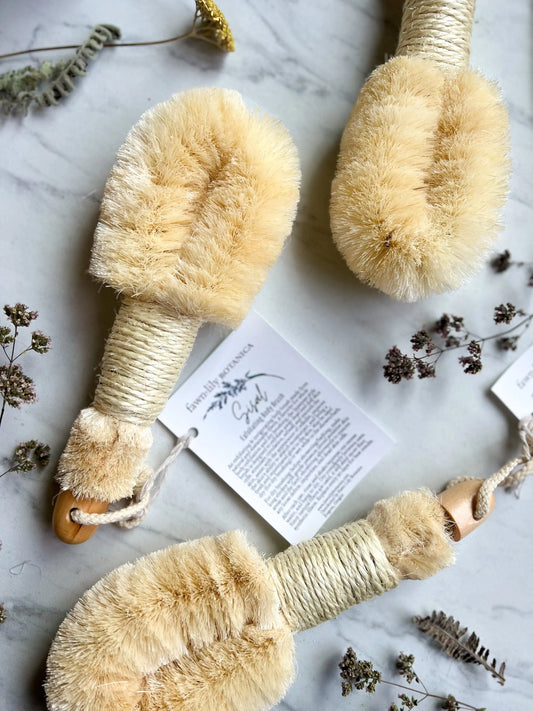
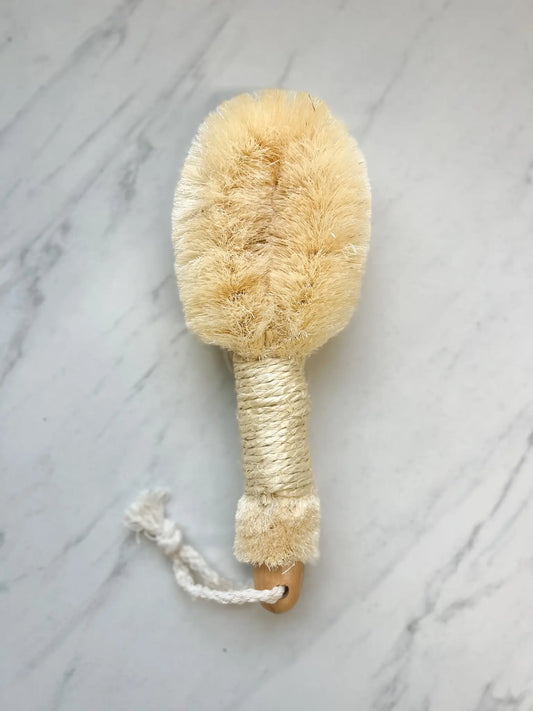
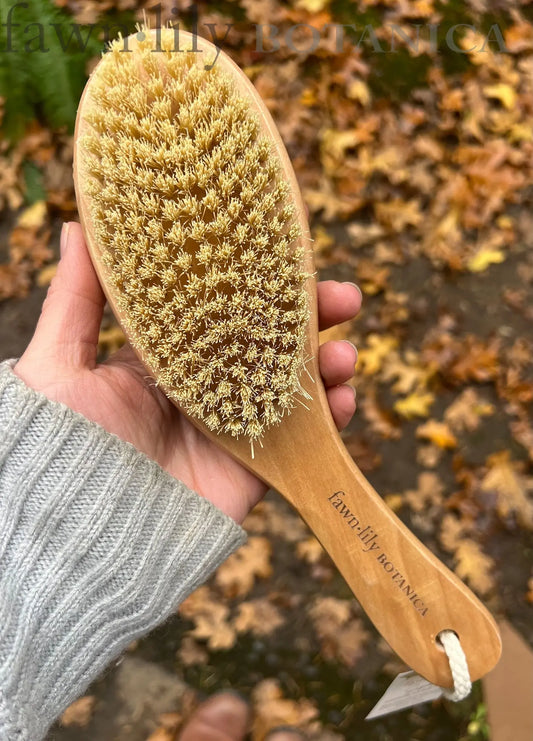
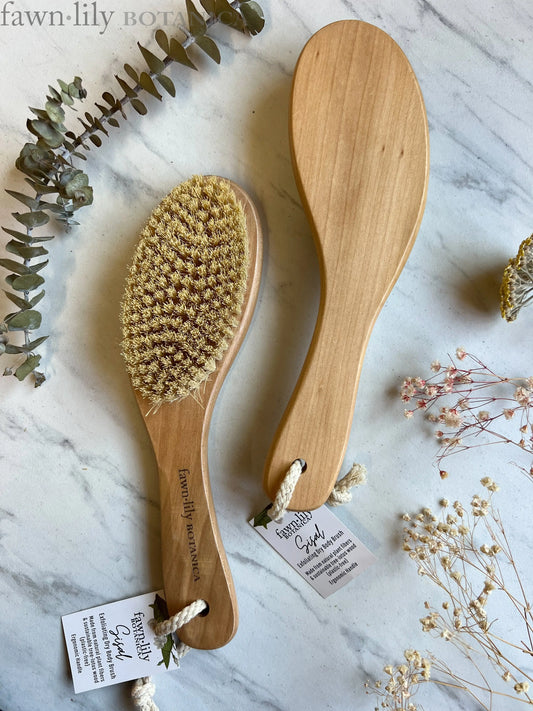
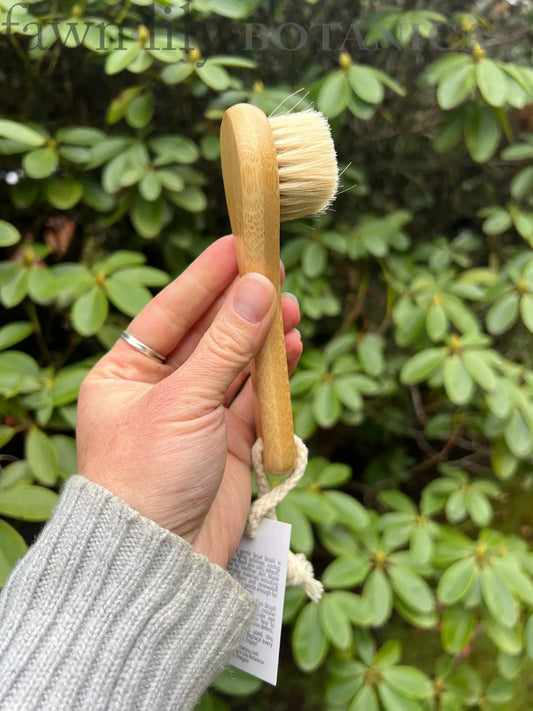
Sisal Body Brushes + Dry Brushes ~ sisal is a natural plant fiber, and our brushes are completely plastic-free. Use them for dry brushing before your shower: the sweeping strokes stimulate blood flow to the skin's surface, bringing oxygen and nutrients to skin cells and leaving skin noticeably brighter. Many people find the ritual of dry brushing a genuinely grounding way to start the day.
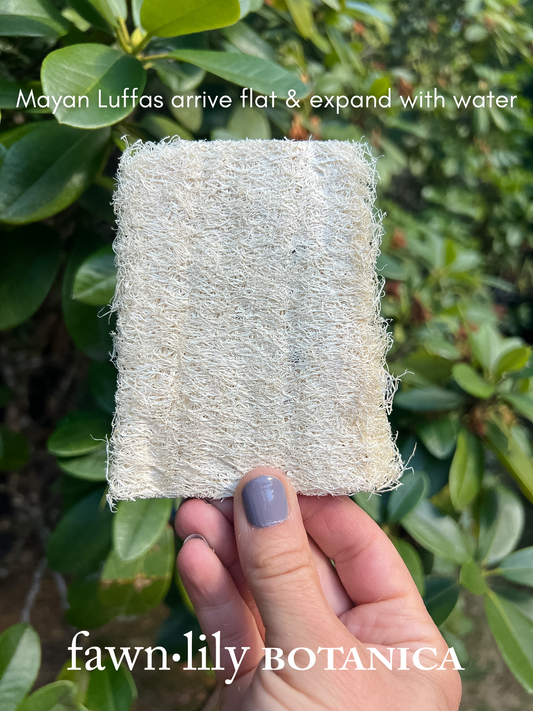
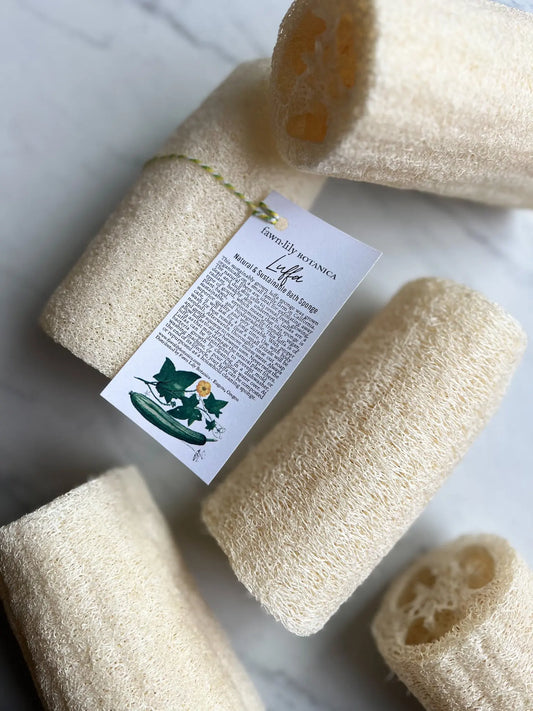
Sustainably Grown Luffas ~ real luffas are not plastic at all ~ they're a type of gourd. Ours are sustainably grown on small family farms without pesticides or herbicides, and are completely biodegradable.
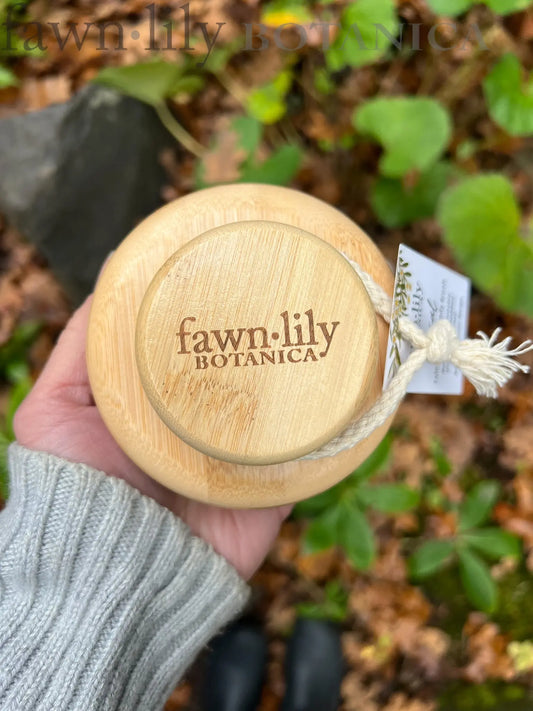
Bamboo Sponge + Soap Holders ~ one of the best things you can do to extend your sponge's life is let it dry fully between uses. Our holders are practical, natural, and made from bamboo or pine.
What Do Our Customers Say?
We have over 400 reviews across our sea sponge line, averaging 4.9 out of 5 stars:
"Quick shipping and very nice sponge! Happy to use instead of a plastic pouf." ~ verified buyer
"The cheap plastic loofah from Amazon have dyes and stain my shower. I thought I'd get some quality sponges. These sponges look amazing ~ great purchase!" ~ Nick, verified buyer
"Sea sponges are a marvel of nature with so many contributions to our planet ~ hypoallergenic, and good for the skin and planet." ~ Matthew T., verified buyer (Gulf of Mexico sponge)
"Love the quality of this sponge ~ it's exactly what I wanted as a natural replacement for my plastic bath pouf. It's soft and silky. I will order from this shop again!" ~ Brenda, verified buyer
"Bonus ~ since it's all natural I don't have to worry about creating microplastics, which is awesome!" ~ Matthew B., verified buyer
Ready to Make the Switch?
Most of our customers tell us they wish they'd switched sooner ~ and I think once you try one, you'll understand why.
"I finally found amazingly soft, absolutely wonderful bath sponges. I love bath sponges, but good ones are not easy to find ~ I've been trying for years. Fawn Lily sponges are perfect. I highly recommend them, and I will be buying them from now on." ~ Barbara S., verified buyer
Shop our full sea sponge + plastic-free bath tool collection →
With gratitude,
Irene / Owner + Maker, Fawn Lily Botanica